The Scottish Distillery Trail: How to Plan a Whisky Road Trip
Right, let’s get one thing out of the way before you book a single ferry: there is no such thing as the Scottish Distillery Trail. Not officially, anyway. There’s a cluster of trails, a scattering of islands, and a lot of very enthusiastic tourist board branding — and if you turn up expecting one tidy signposted route from the Highlands to the sea, you’ll end up either doing far too much driving or missing the bit everyone actually recommends.
I’ve spent enough weekends pottering around Speyside (it’s about an hour from my front door in Aberdeen, which is either a blessing or a liver hazard depending on how you look at it) to know that the whole thing is more fun once you stop looking for one perfect itinerary and start picking the region that actually suits your trip. So that’s what this is: a proper, honest planner for whichever bit of whisky Scotland you fancy — Speyside, Islay, the islands further west, or something you cobble together yourself.
The short version: Scotland has over 151 working distilleries and 70-odd visitor centres, and between them they pulled in 2.7 million visits in 2024 — officially the most-visited tourist attraction in the country. Only one route is actually signposted (Speyside’s Malt Whisky Trail), Islay crams about ten distilleries onto a 25-mile island, and there’s now a proper Hebridean trail too. Book ahead, mind the drink-drive limit, and read on before you pick a region.
So what actually is “the Scottish Distillery Trail”?
Honestly? Whatever you want it to be. Scotland splits its whisky into five regions — Speyside, Highland, Lowland, Islay and Campbeltown — and across them there are more than 151 operating distilleries, with upwards of 70 visitor centres open to the public (Scotch Whisky Association). That’s a lot of tartan-carpeted gift shops to choose from.
Only one route is formally signposted with its own brown road signs: Speyside’s Malt Whisky Trail. Everything else — Islay’s distillery-hopping, the newer Hebridean Whisky Trail, a Highland loop you build yourself — is a trail in spirit rather than on a map. Which is honestly fine. It just means the planning is on you, hence this post.
Here’s the shape of it, if you’re skimming: Speyside is dense, easy driving and good for beginners. Islay is small, peaty and increasingly rammed in festival season. The Hebrides are for people with time, patience and a taste for ferry timetables. And the Highlands and Lowlands are where you build your own loop out of the big names everyone’s actually heard of.
Speyside’s Malt Whisky Trail — the only one with actual road signs
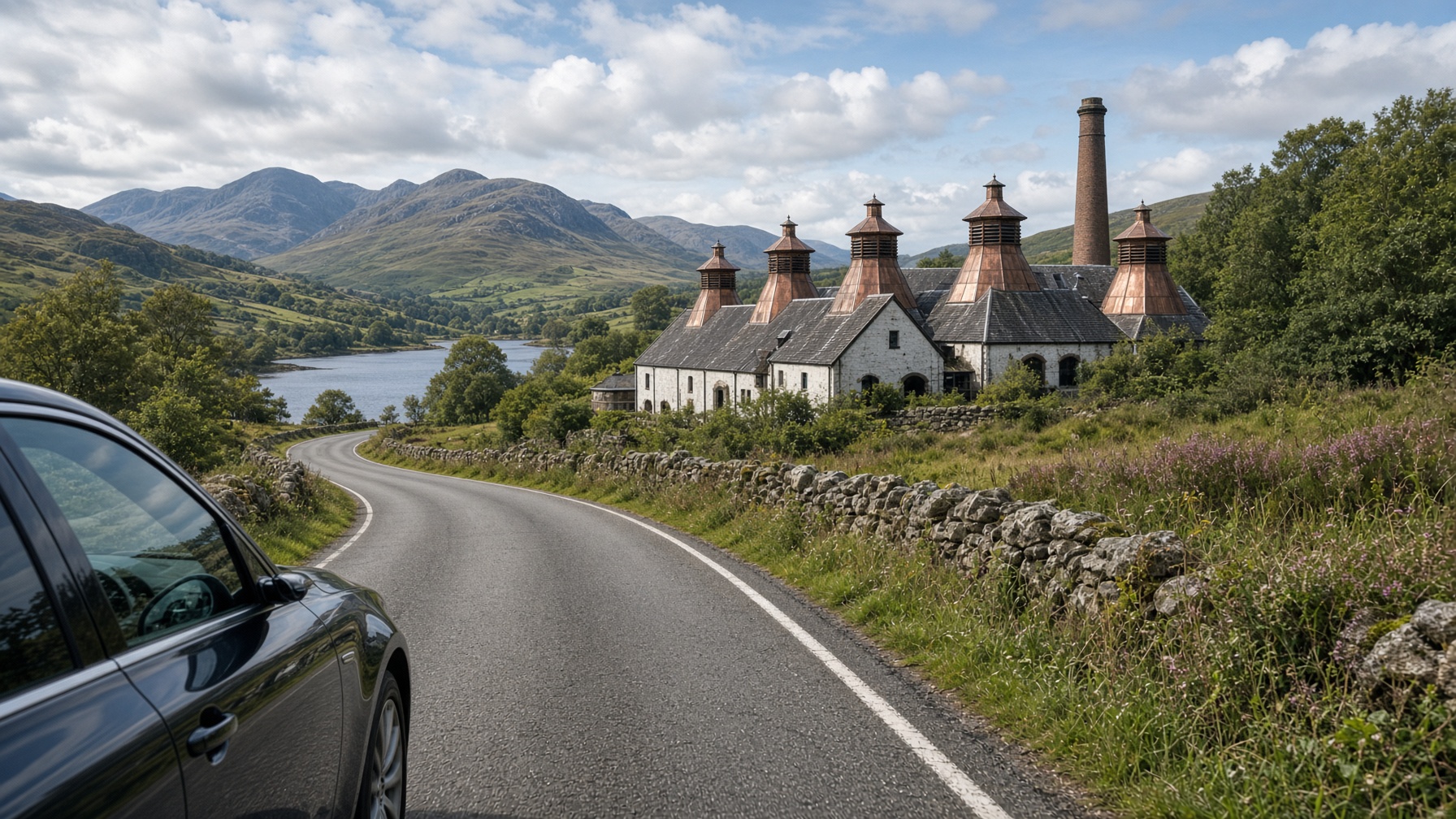
This is the sensible place to start, and not just because it’s the one I know best. The Malt Whisky Trail links seven working distilleries — Glenlivet, Cardhu, Glenfiddich, Glen Grant, Strathisla, Glen Moray and Benromach — plus the Speyside Cooperage, where you can watch coopers bash barrels together with nothing but heat, hoops and bad language. VisitScotland’s official itinerary allows three days for the lot, which is about right if you don’t want to be doing tasting notes through gritted teeth by day two.
A sensible order: start in the Dufftown/Keith cluster (Glenfiddich and Strathisla are a few minutes apart — Strathisla is the oldest operating distillery in the Highlands, dating to 1786, and it’s genuinely one of the prettiest), then swing through Rothes for Glen Grant and Cardhu (Cardhu’s claim to fame: it was the first distillery officially fronted by a woman, Helen Cumming), then finish around Elgin and Forres with Glen Moray and Benromach. You might also find the historic Dallas Dhu distillery on your route — it stopped producing decades ago but still runs tours through the old kiln and mash house, so it’s worth checking its current opening status before you build it into a tight schedule.
The whole region also hosts the Spirit of Speyside festival each spring (2026’s ran 29 April to 4 May), when every distillery seems to simultaneously decide it’s time for a ceilidh.
According to The Scottish Distillery Guide, driving-wise, this is the easiest of the lot — decent roads, short hops between distilleries, and you’re never more than 20 minutes from a petrol station or a bacon roll.
Islay — nine (ish) distilleries, one very small island
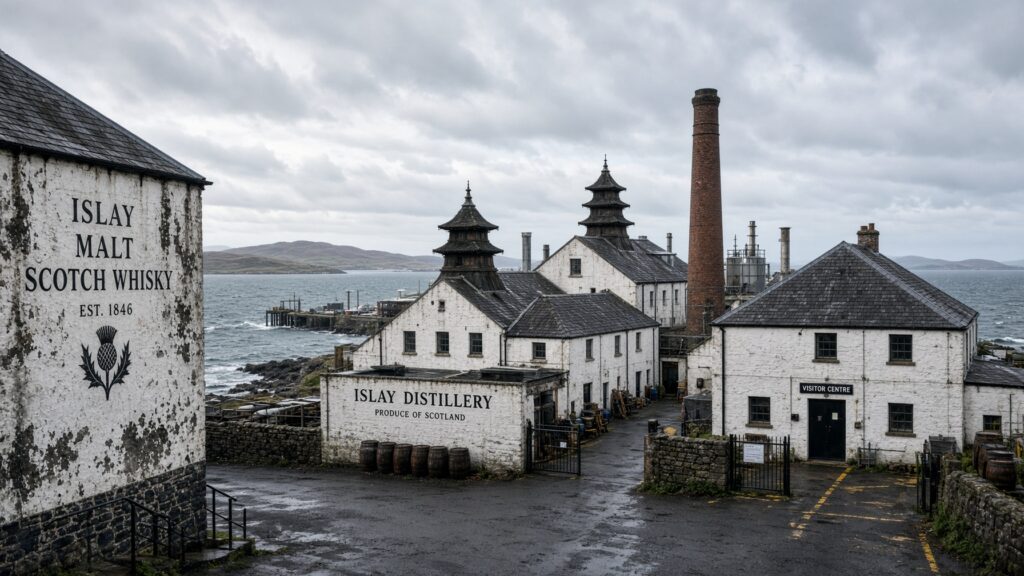
Islay is where things get properly committed. It’s a 25-mile-long island with a year-round population under 3,300, and somehow it supports around ten working distilleries, with an eleventh, Laggan Bay, joining the lineup in 2026. If Speyside is a gentle introduction, Islay is where you go once you’ve decided you quite like peat and smoke and the taste of a bonfire in a glass.
You’ll need the ferry from Kennacraig, and you should book it well in advance — especially if you’re travelling in May, because that’s when Fèis Ìle, the Islay Festival, takes over the entire island. 2026 marked its 40th year (22–31 May), with each distillery hosting its own open day of tastings, tours and live music. Accommodation for festival week starts getting booked up in February and March, so if that’s the plan, don’t leave it late.
The nice bit of planning news: the south-coast trio of Laphroaig, Lagavulin and Ardbeg sit close enough together that you can walk or cycle between them, which is handy on an island where you’d really rather not be driving after a few tasting-room drams. Bruichladdich, on the other side of the island, throws its own festival day (Rock’ndaal) during Fèis Ìle week too.
Give yourself two to three full days if you want to do Islay properly, more if you’re going during festival week and want to actually get into the events rather than just admire them through a pub window.
The Hebridean Whisky Trail — for people with more time than sense
This is the one for whisky obsessives who also happen to love a ferry timetable. The Hebridean Whisky Trail strings together the island distilleries further north and west — its 2026 festival (5–12 September, now in its fifth year) featured eight of them: North Uist, Tobermory, Benbecula, Torabhaig, Isle of Harris, Isle of Tiree, Talisker and Isle of Raasay, with Raasay hosting that year’s grand finale after being named Visitor Attraction of the Year at the 2026 World Whiskies Awards.
Be honest with yourself about logistics here — this isn’t a long weekend, it’s a proper expedition involving multiple ferries and a fair bit of waiting around on slipways. If you only want a taste of it, Skye is the sensible entry point: you’ve got Talisker and Torabhaig right there, and Raasay is a 25-minute ferry away. From there, each further distillery adds a day, roughly.
The pay-off is that you’ll see a side of Scotland most Speyside-and-done tourists never bother with — some genuinely stunning, properly remote coastline, and distilleries that feel more like community projects than visitor attractions.
Or just build your own Highland or Lowland loop
Not every good distillery sits on an official trail, and some of the busiest in the country aren’t on one at all. Diageo’s brand homes alone pulled in over a million visits across Scotland for the first time in a recent year, with Talisker (184,000 visitors) and Oban (157,000) among the busiest single sites (The Spirits Business). Johnnie Walker’s Princes Street experience in Edinburgh passed a million visitors in 2024 on its own.
If you’re not fussed about ticking off an official trail, here are two loops worth building yourself:
A Perthshire loop — Blair Athol in Pitlochry, Dalwhinnie out in the Cairngorms, Dewar’s Aberfeldy (which recently opened a slick new Warehouse Experience in its original 1898 buildings), and Glenturret, which likes to call itself Scotland’s oldest working distillery.
A Lowland day trip from Edinburgh or Glasgow — Auchentoshan, the only Scottish distillery that triple-distills everything it makes, plus Lindores Abbey, built on the site of the very first written record of Scotch whisky back in 1494, and Rosebank, recently brought back from the dead after years mothballed.
Neither of these has a brown tourist-trail sign pointing the way. You just have to want it enough to type the postcodes into your satnav yourself.
Right, let’s talk about the drink-driving elephant in the room
Nobody writing “romantic whisky road trip” content ever seems to mention this, so I will: Scotland’s drink-drive limit is lower than England’s — 50mg of alcohol per 100ml of blood, rather than 80mg — which in practice means one proper dram can tip you over it. If you’re the one driving, this matters a lot more here than on a typical English pub crawl.
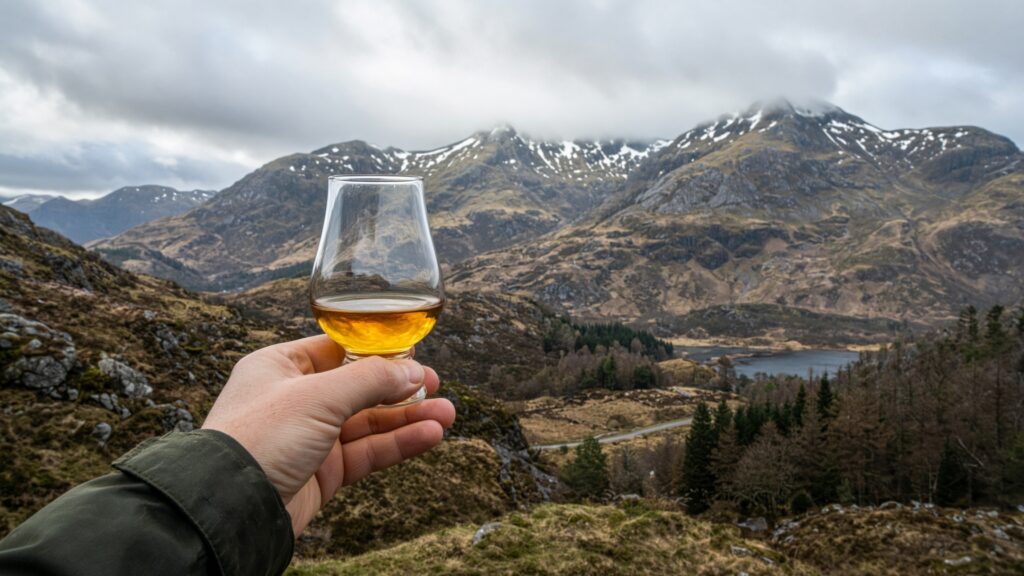
The good news is distilleries have been dealing with this for decades and are generally very good about it. Almost every visitor centre will bottle up your tasting as miniatures or a “driver’s dram” to take home instead of drinking it on site, so nobody has to stand there sniffing a glass they can’t touch.
If you’d rather not think about it at all, your options are:
- Guided minibus or small-group tours — genuinely the easiest way to do Speyside or a Highland loop properly, since someone else does the driving and the route-planning
- Trains — the line through Elgin and Keith gets you within striking distance of several Speyside distilleries, and the West Highland Line to Oban is one of the great train journeys in Britain, distillery or not
- Taxis and local minibus services — increasingly common around Speyside specifically for distillery-hopping
- Cycling — a genuinely good option on Islay, where distances between the south-coast distilleries are short and the roads are quiet
Whichever you pick, decide before you start tasting, not after.
When to go, what it costs, and how far ahead to book
The short answer is: earlier than you think. Scotch whisky tourism has been on a serious upward curve for a decade — visitor spend has more than doubled in that time, and over 60% of 2024’s visitors came from abroad, up from just under half in 2022 (The Scotsman). Distilleries have responded by pouring serious money into their visitor experiences — the Scotch Whisky Experience spent £3.5m on a new tour in Edinburgh, and Glencadam opened a multimillion-pound new visitor centre in late 2025 — which is lovely, except it also means more people wanting the same tour slots.
Peak season is May to September, and if you’re aiming for a specific festival (Spirit of Speyside in spring, Fèis Ìle at the end of May, the Hebridean Whisky Festival in early September) you genuinely do need to book months ahead, both for tours and for anywhere to sleep.
If flexibility is on your side, there’s a case for going properly off-season. A few of the big operators reported softer footfall at some visitor centres in 2025, which — reading between the lines — suggests mid-week, out-of-season visits are easier to land a good tour slot for than they were a couple of years ago. Shoulder season (April or October) is probably the sweet spot: decent weather odds, thinner crowds, and tours that haven’t sold out three months in advance.
Quick answers, if you’re skimming
How many distilleries are on the Malt Whisky Trail? Seven working distilleries, plus the Speyside Cooperage and the historic Dallas Dhu.
How many days do you need for a Scottish whisky trail? Three days for Speyside on its own. Two to three for Islay, more during festival week. A week or more if you’re properly doing the Hebridean Whisky Trail.
How many whisky distilleries are there in Scotland, actually? Over 151 operating, with more than 70 open to visitors, spread across five regions.
Can you do a distillery trail without a car? Yes — guided tours, trains to Elgin, Keith or Oban, Islay ferries plus a bike or taxi, and Speyside-specific minibus services all work well.
When’s the Islay whisky festival? Fèis Ìle runs for ten days at the end of May — 22 to 31 May in 2026, its 40th year. Dates for 2027 weren’t confirmed at the time of writing.
The upshot
Pick one region, not all of them. Speyside if you want it easy and signposted, Islay if you’ve already decided peat is your personality, the Hebrides if you’ve got the time and the patience for ferry timetables, or a Highland/Lowland loop you’ve built yourself if you’d rather not follow anyone else’s itinerary. Book the popular tours and any festival-week accommodation well ahead, sort out your transport before you sort out your tastings, and don’t try to do all five regions on one trip — you’ll just end up exhausted, slightly jet-lagged on whisky, and not really remembering any of it properly.
Go slow. Have the dram. Let someone else drive.
Sources
- Scotch Whisky Association — Tours, Trails and Tourism
- VisitScotland — Speyside Malt Whisky Trail itinerary
- The Scotsman — Whisky tourism on the rise, with a focus on luxury experiences
- Fèis Ìle trip report, Fora Travel
- The Whiskey Wash — Isle of Raasay to host Hebridean Whisky Festival 2026 finale
- The Spirits Business — Diageo visitor numbers surpass 1m in Scotland
Last updated: October 2026. Festival dates and distillery opening statuses change — check directly before you travel.